Are Latin Books The New Collectible?
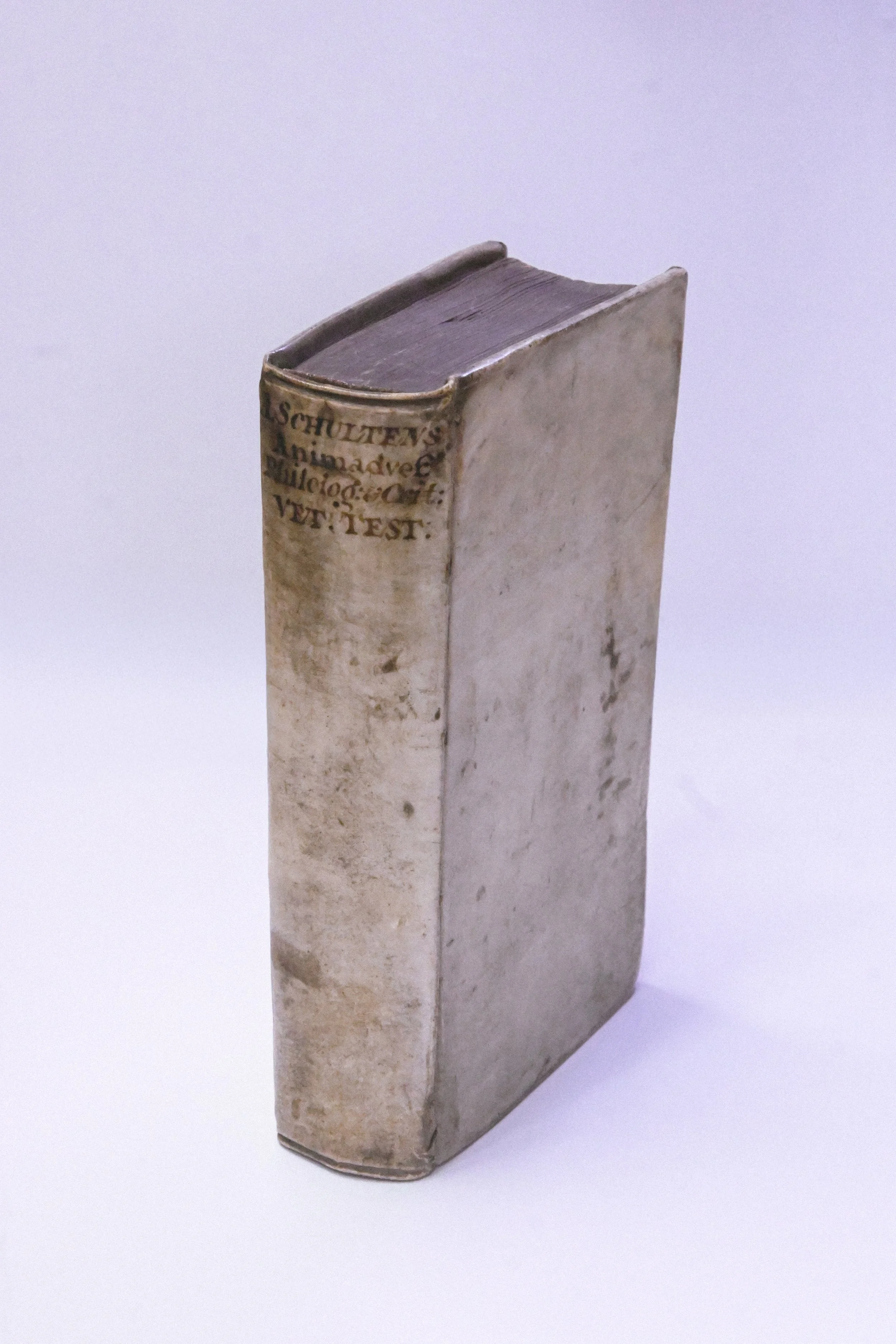
Animadversiones Philologicae et Criticae ad varia loca veteris Testamenti by Alberto Schutens.
“People just don’t buy Latin in Australia!”
This statement is one I’ve heard from booksellers countless times over the last two decades. Despite the scepticism, I have devoted myself to promoting and selling rare Latin books for many years. With our extensive range of Egyptology titles, these volumes beautifully round out any serious library. Their scarcity in Australia makes them rare treasures and they are finally gaining the attention they deserve from collectors and scholars alike
Where Is Latin Taught in Australia?
While Latin has traditionally been taught in grammar schools, private institutions and universities, there has been a refreshing shift in recent years. Many secondary schools now offer Latin and Classical Civilisations as subjects.
These institutions deserve applause for championing Latin, as it significantly enhances students’ understanding of English literature, grammar, art, poetry and even the spoken language. There is also a modern way anyone can try: you can now learn Latin on Duolingo, making ancient language study more accessible than ever.
Bonus? It might just help you win that all-important trivia night competition.
My Personal Journey with Latin Books
Although I did “Class Civ” at my school and my English teacher always added some “Latin roots,” my interest in the ancient world really deepened later; My fascination with Ancient Rome began in the 1990s when I was very involved with the Ancient History Teachers Association in NSW and the Classical Teachers Association of Victoria, attending many conferences and promoting and selling new books.
A pivotal moment came in 1993 at the Edwin Judge Conference at Macquarie University, when I met the legendary author and classicist Colleen McCullough AO. Her vivid enthusiasm for Ancient Rome and her generous, scholarly conversation inspired me to delve much deeper into the world of Latin texts and to read her monumental opus on Roman history and culture. Colleen gave me some invaluable advice about reading Latin names, instead of reading the full name Marcus Tullius Cicero for example, just read the last name Cicero. It certainly speeds up your reading time.
Fast forward to 2012, when I began acquiring rare Latin books, focusing on the 18th century editions and anything related to Ancient Rome. My love for vellum-bound books grew, and I was soon mesmerized by the history they held. Using contemporary volumes from LOEB (who have an extensive list) also helped me read and interpret the texts.
Holding a book printed before 1800, and especially one from the 1600s, became a personal joy and a special treat for my customers, many of whom have since become enthusiastic collectors themselves. Over the years, I’ve witnessed the growing interest in Latin and Classical books among collectors in Australia, from practical texts for Latin learners to genuine collectible pieces, Latin books including Incunables (books from the early years of printing before 1500) are finding their place in the Australian Rare Book scene.
The History and Aesthetics of Latin Books
One of the most compelling reasons to collect Latin and Ancient Greek books is their historical and aesthetic value, the ability to read Latin and Ancient Greek was considered the height of education and culture in Ancient Rome. This has come down to us through the Middle Ages, when books were rescued and stored but feared for their pagan content. The Renaissance, where ancient texts were re-discovered, read and brought into European culture and art again.
The Age of Enlightenment in the 18th century, when the beginnings of modern science and astronomy developed and into our modern era with the blistering development of technology from the early 1900’s to today. The study of these periods in history of Rome and other ancient cultures, teaches us about democracy, philosophy, mathematics, discourse and politics. In fact, many of our modern political events have ancient precedents.
For example, the stabbing of Caesar – the assassination of JFK. In the writings of Suetonius, Cicero and Tacitus much of today’s history is mirrored. In my collection I have had some stunning books for example Duns Scotis (1534) which is a book originally a manuscript from the 1300’s arguing does God exist? Seneca Opera (1601) the complete works of Seneca, which were both sold a few years ago.
Currently I have some vellum editions of Jewish European philosophy. Harpocrates (1687) and a beautiful Juvenal from the Chiswick Press; but books come and go, like feathers landing and to see our complete catalogue please contact us for further details.
Pricing and Collecting Latin Books
Collecting is an adventure.
It’s about pursuing what you love and letting that passion guide you – not the price tag or other’s opinions.
Latin books, with their legacy of knowledge and beauty, are more than just possessions, they are heirlooms waiting to be cherished by future generations.
Final Thoughts
So, dive into the world of Latin, savor the journey, and let your collection reflect your unique story.
At Ankh Antiquarian Books, we offer Latin books priced from $45 to $20,000, making it possible for scholars, rare-book collectors, and enthusiastic readers alike to discover something exceptional.
Whether you’re a seasoned collector, a dedicated student of Latin, or simply curious.
There’s a book here ready to inspire and reward your curiosity.
